
Japan Travel — What Most People Get Wrong (And How to Fix It)
What Most Travelers Get Wrong About Traveling Japan


Many first-time visitors believe Japan is complicated to travel.
Too many train lines, too many passes, too many rules. In reality, the problem is not Japan — it’s overplanning the wrong way.
A common mistake is trying to “see everything.” Travelers often jump between distant cities every day, losing time in transfers instead of enjoying places. Another mistake is assuming that regional travel is slower or more expensive. In fact, regional travel often costs less per day and creates less stress.
For example:
A Tokyo–Kyoto round trip by bullet train costs roughly ¥28,000, while staying within one region for three days often costs ¥6,000–¥10,000 total in local transport.
Japan rewards travelers who plan structure, not density.
Once this mindset shifts, transport becomes a tool — not an obstacle.
How Japan’s Regions Actually Work
Japan is divided into travel regions that function almost like independent systems. Each region has its own rail network, pricing logic, and travel rhythm.
The main regions most travelers use are:
Kanto (Tokyo and surroundings)
Kansai (Kyoto, Osaka, Nara)
Central Japan (Alps, Takayama, Kanazawa)
Western Japan (Hiroshima, Okayama)
Kyushu (Fukuoka and the south)
Hokkaido (north, wide distances)
Within a region, travel is optimized for locals and domestic tourism. That means frequent trains, predictable schedules, and shorter distances.
Most mistakes happen when travelers mix regions without understanding these borders. Once you treat regions as “travel zones,” Japan becomes much easier to navigate — even without speaking Japanese.
Regional Rail vs Long-Distance Trains
Japan Rail Pass: When It Helps — and When It Doesn’t
Long-distance bullet trains are fast, impressive, and efficient.
But they are not always the best solution. A Shinkansen ride saves time when:
distances exceed 300 km
your trip duration is short
you move between major hubs
Regional rail makes more sense when:
you stay 2–4 days in one area
you want flexible day trips
you prefer fewer transfers
Example:
Traveling within Kansai (Kyoto–Osaka–Nara) costs around ¥1,000–¥2,000 per day using regional trains.
Using long-distance trains unnecessarily can double daily costs without adding value.
The smartest trips combine one long-distance move with regional exploration afterward.
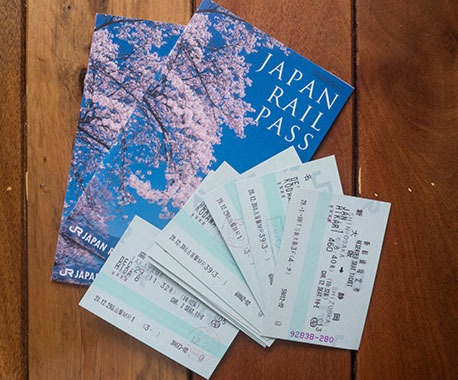
The Japan Rail Pass is powerful, but misunderstood. It works best if:
you travel long distances multiple times
your trip is compressed into 7–14 days
you plan your route before arrival
It becomes inefficient if:
you stay mostly in one region
you move slowly
you prefer spontaneous travel
After the price increase, many travelers save more money using regional passes or single tickets instead.
Example:
A 7-day nationwide pass costs around ¥50,000.
A regional pass covering Kansai or Central Japan often costs ¥10,000–¥18,000.
Here are some benefits of the JR:
One single ticket for all your trips across Japan.
All JR Shinkansen lines (Nozomi/Mizuho only with surcharge), Narita Express, and Tokyo Haneda Monorail included.
Local JR trains in cities like Tokyo & Kyoto, plus part of the IR Ishikawa Line.
JR buses (except express) and free Wi-Fi on Shinkansen.
Discounts at selected attractions.
Not valid on private railway lines (e.g., Odakyu, Kintetsu).
Understanding Regional Rail Companies
Japan’s rail system is operated by several regional companies, most famously:
JR East
JR West
JR Central
You do not need to memorize them.
What matters:
Each company optimizes travel within its region.
Tickets, passes, and schedules are designed for regional efficiency.
That’s why regional passes often outperform nationwide options for real-world trips.
Think of Japan Rail as connected ecosystems, not one giant network.




Japanstayguide made our Japan trip unforgettable with seamless planning and heartfelt local touches.
Amy & Ken


★★★★★
The Travel Strategy That Actually Works in Japan
Most people don’t fail because Japan is complicated — they fail because they travel without a structure. Japan works best when you follow main routes, use one base, and pick the right card for the right situation.
Main Routes (Not Random Cities)
Japan travel should follow rail corridors, not zigzag plans. Most efficient main routes:
Tokyo → Kyoto → Osaka
Tokyo → Kanagawa → Hakone
Osaka → Kyoto → Nara
Tokyo → Nagano → Kanazawa
These routes have:
High train frequency
Fast connections
Cheap regional options
One Base, Regional Expansion
Don’t change hotels every 1–2 nights.
Stay longer, move smarter. Example (Tokyo base):
Kamakura
Nikko
Yokohama
Kawagoe
All reachable with local or regional trains — no hotel change needed.
Train Cards & Passes (By Situation)
Daily city travel
Suica / Pasmo
Best for: subways, local trains, buses, stores
No planning, tap & go
Regional travel (best value)
JR East Pass → Tokyo & surroundings
Kansai regional passes → Kyoto / Osaka / Nara
Best for: multiple regional trips over several days
Long-distance travel
Individual Shinkansen tickets (Tokyo ↔ Kyoto / Osaka)
Japan Rail Pass only if:
Many long-distance trips
Short timeframe
Clear cost advantage
Most travelers do not need the JR Pass, if they plan do stay for a short period of time-
Concrete Flow Example
Goal: Tokyo → Osaka → KyotoCorrect:
Stay in Tokyo (regional trips included)
Shinkansen to Osaka
Stay in Osaka, visit Kyoto as day trip
Wrong:
Tokyo → Kyoto → Osaka → Kyoto
Constant hotel switching
Random ticket buying
💰 Cost Comparison (See the Savings!)
Correct, structured route: ~¥30,000–¥35,000 (~€170–€200)
Includes Shinkansen tickets + local travel in Tokyo/Osaka/KyotoWrong route with a 7‑day JR Pass: ~¥50,000 (~€299)
Over €90 more expensive for the same journey!
Accomodation /Tipps ect. Cooming soon
Planning tours also? SEE here
Planning to go to Tokyo? SEE here
Contact
Reach out anytime for personalized travel plans
Phone
© 2025. All rights reserved.